Inducted 2025
Roy Carver

Roy Carver was an engineer, entrepreneur, pilot, and philanthropist whose bold ideas built global businesses. He co-founded Carver Pump Company during the Depression, supplying vital equipment to Allied ships in World War II. After discovering a tire-retreading process in Germany, he launched Bandag, which grew into an international leader. A world traveler and risk-taker, Carver also became one of Iowa’s most generous benefactors, funding education, health care, and the arts through lasting institutions and scholarships.
Inducted 2025
Louis Semple Clarke

Louis Semple Clarke was an engineer, inventor, and co-founder of the Autocar Company. A quiet innovator, he introduced key advancements that shaped modern driving: porcelain spark plugs, left-hand steering, shaft drive, and circulating oil systems. Clarke’s engineering vision carried Autocar into truck manufacturing, making him an unsung pioneer of American automotive and trucking history.
Inducted 2022
Earl & Lillian Congdon


Old Dominion Freight Line started in 1934 with Lillian Congdon’s $1,700 savings and a single truck hauling eggs from Norfolk to Richmond. After Earl Congdon Sr.’s passing in 1950, Lillian led the company through years of growth. From its modest beginnings, Old Dominion has stayed resilient and determined, marking 88 years in 2022.
Inducted 2021
Clessie Cummins


1888-1968
Clessie Cummins, founder of the Cummins Engine Co., improved on and designed new diesel engines. Cummins also virtually eliminated brake failures in steep downhill travel with his engine compression-release brake—known today as the “Jake Brake”—that he designed and patented.
Inducted 2026
Chester England

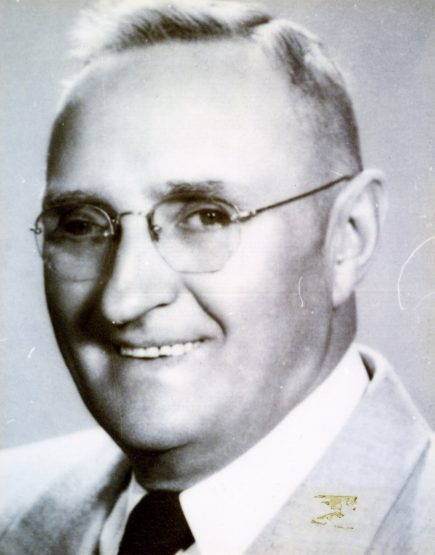
Before C.R. England became one of North America’s largest refrigerated carriers, it was just one determined man, a Ford Model T truck, and a 4:00 a.m. wake-up call. Born on a farm in Plain City, Utah, in 1896, Chester Rodney England quickly realized his true calling wasn’t tilling the soil—it was moving what the soil produced. In 1920, he purchased a single Model T to haul milk for local dairies and transport farm produce to market, laying the foundation for a century-spanning family empire.
Operating in the early decades of commercial trucking meant navigating a rugged, unregulated industry with unreliable equipment and no interstate highway system. Chester kept the business afloat through the Great Depression by outworking the competition and instilling that relentless work ethic in his two sons, Gene and Bill, who spent their childhood summers riding along on weeklong hauls to Wyoming.
When World War II called Gene and Bill overseas, Chester kept the wheels turning at home—even hauling Mexican bananas up from Texas and returning south with loads of Utah potatoes. Meanwhile, his sons famously sold their military cigarette rations to save money for the family business. Within two weeks of their discharge, the father-and-sons trio pooled their resources to buy their first diesel rig, a used 1940 Kenworth, and began pioneering refrigerated transport using early ice-bunker trailers.
Armed with grit and a willingness to push boundaries, Chester and his sons transformed their regional potato-hauling operation into a national powerhouse. By launching a bold 72-hour coast-to-coast delivery service across two-lane highways, C.R. England proved a family-run outfit could go toe-to-toe with the biggest carriers in the country.
More than a hundred years later, the company Chester built from a single truck remains fiercely true to its roots. Spanning five generations of England family leadership, C.R. England is still a trucking company run by truckers—defined by leading-edge logistics, a culture of hard work, and a family spirit that welcomes every driver who climbs behind the wheel.