Inducted 2026
Chester England

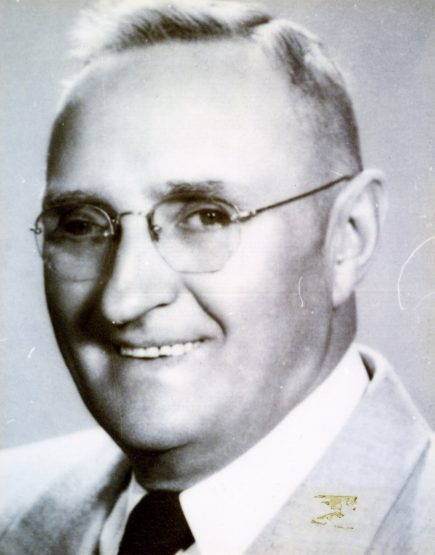
Before C.R. England became one of North America’s largest refrigerated carriers, it was just one determined man, a Ford Model T truck, and a 4:00 a.m. wake-up call. Born on a farm in Plain City, Utah, in 1896, Chester Rodney England quickly realized his true calling wasn’t tilling the soil—it was moving what the soil produced. In 1920, he purchased a single Model T to haul milk for local dairies and transport farm produce to market, laying the foundation for a century-spanning family empire.
Operating in the early decades of commercial trucking meant navigating a rugged, unregulated industry with unreliable equipment and no interstate highway system. Chester kept the business afloat through the Great Depression by outworking the competition and instilling that relentless work ethic in his two sons, Gene and Bill, who spent their childhood summers riding along on weeklong hauls to Wyoming.
When World War II called Gene and Bill overseas, Chester kept the wheels turning at home—even hauling Mexican bananas up from Texas and returning south with loads of Utah potatoes. Meanwhile, his sons famously sold their military cigarette rations to save money for the family business. Within two weeks of their discharge, the father-and-sons trio pooled their resources to buy their first diesel rig, a used 1940 Kenworth, and began pioneering refrigerated transport using early ice-bunker trailers.
Armed with grit and a willingness to push boundaries, Chester and his sons transformed their regional potato-hauling operation into a national powerhouse. By launching a bold 72-hour coast-to-coast delivery service across two-lane highways, C.R. England proved a family-run outfit could go toe-to-toe with the biggest carriers in the country.
More than a hundred years later, the company Chester built from a single truck remains fiercely true to its roots. Spanning five generations of England family leadership, C.R. England is still a trucking company run by truckers—defined by leading-edge logistics, a culture of hard work, and a family spirit that welcomes every driver who climbs behind the wheel.
Inducted 2026
Harold Groendyke

Inducted 2022
Leland James

Leland James founded Consolidated Truck Lines in 1929, building a transcontinental network through acquisitions and fleet standardization. When no one would build his lightweight cabover trucks, he launched Freightliner in 1942. His push for custom designs and double trailers reshaped trucking, and his legacy still drives the industry today.
Inducted 2024
Frederick Jones


1893-1961
In 1938, Frederick McKinley Jones was charged with a mission that would revolutionize the refrigeration industry. From humble beginnings, Thermo King Corporation emerged as a titan in the trucking industry. Known for pioneering portable air-cooling units for trucks and prioritizing innovation, Jones’s legacy continues to shape the modern landscape.
Inducted 2023
Edgar Worthington & Harry Kent


In 1917, Edgar Worthington and Captain Frederick Kent revived Gersix Motor Company, former division of Gerlinger Company, later joined by Kent’s son Harry. In 1923, they renamed it Kenworth. They pioneered diesel trucks during the Great Depression and grew Kenworth into a leader known for iconic models like the W-900 and K-100.